
TOPIC 7. WRITING CONCLUSION AND ABSTRACT
INTRODUCTION
A. Learning Objectives
After completing this session, students are expected to be able to:
- Apply Paltridge and Starfield (2019) rhetorical moves in drafting conclusion
- Apply Hakim et al (2021) rhetorical moves in drafting abstract
- Evaluate and revise their own drafts and peer drafts through structured peer review, focusing on rhetorical structure, academic writing conventions, and academic and digital ethics.
B. Skill Focus of This Session
This session emphasizes the rhetorical construction of the Abstract and Conclusion sections in scientific articles through the application of Paltridge and Starfield’s (2019) rhetorical moves for conclusions and Hakim et al.’s (2021) rhetorical moves for abstracts. Students move from guided application to critical evaluation and ethical revision through structured peer review.
C. Micro Skills Developed
In this session, students will develop the ability to:
- identify the communicative purposes and rhetorical moves of Abstract and Conclusion sections,
- apply Paltridge and Starfield’s rhetorical moves to draft coherent and purposeful conclusion paragraphs,
- apply Hakim et al.’s rhetorical moves to draft concise, informative, and well-structured abstracts,
- distinguish between summarizing results, interpreting contributions, and highlighting implications,
- apply structured peer review criteria to evaluate rhetorical completeness, academic conventions, and clarity,
- assess originality, citation practices (where applicable), and ethical use of digital tools in drafting.
These micro skills enhance students’ precision in rhetorical control and effectiveness in high-stakes academic sections.
D. Macro Skills Developed
Building upon these abilities, students will develop the capacity to:
- construct abstracts and conclusions that accurately represent the study’s purpose, methods, findings, and contributions,
- articulate the significance and implications of research within disciplinary contexts,
- demonstrate academic and digital ethics through responsible drafting, peer evaluation, and revision practices,
- engage in reflective revision based on rubric-guided peer feedback,
- present a coherent and credible scholarly identity through well-aligned abstracts and conclusions.
Through these macro skills, students progress from understanding rhetorical patterns to strategically shaping the final impression of their research, ensuring clarity, integrity, and publishability.
BRAINSTORMING (YIELD)
Students independently examine examples of conclusions and abstracts from reputable journal articles. They are asked to identify language features, structural patterns, and compliance with citation styles.
A. Worksheet 7.1 Abstract and Conclusion Analysis with Swales CARS Model
Instructions:
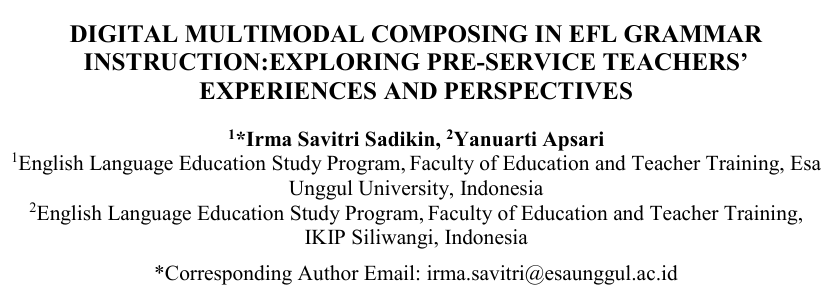
Read the following abstract and conclusion below. Analyze each sentence by identifying its move according to Swales’ CARS model. The title of the article is Digital Multimodal Composing in EFL Grammar Instruction: Exploring Pre-Service Teachers’ Experiences and Perspectives. It is written by Irma Savitri Sadikin (Esa Unggul University) and Yanuarti Apsari (IKIP Siliwangi). It was published in JOLLT (Journal of Languages and Language Teaching), Vol. 13, No. 3 (2025). The full article can be accessed https://e-journal3.undikma.ac.id/index.php/jollt/article/view/14709
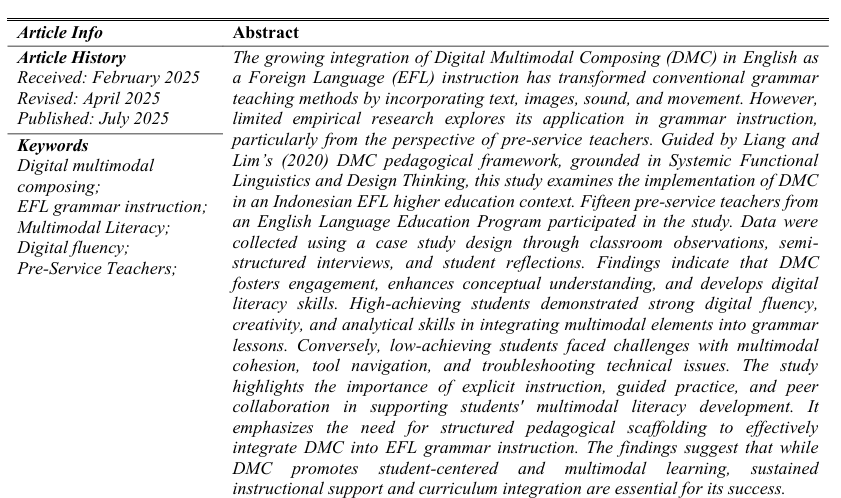
Read the abstract above. For each sentence, identify its move according to Swales’ CARS model and complete the table below.
| Move | Sentences from abstract |
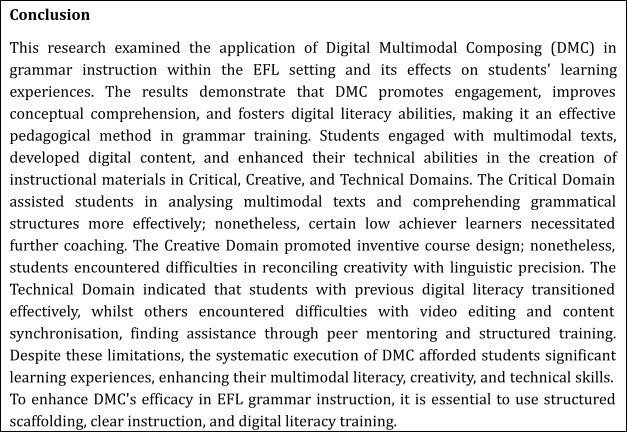
Read the conclusion above. For each sentence, identify its move according to Swales’ CARS model and complete the table below.
| Move | Sentences from Conclusion |
Reflection Questions
- Which Move is most commonly found in the abstracts?
- Which Move is sometimes missing? Why do you think so?
- What tenses are frequently used in each Move?
- What lesson can you apply to your own abstract writing?
- Does the conclusion provide only a summary, or does it also interpret findings?
- How are implications for theory or practice stated?
- Is there a mention of limitations or suggestions for further research?
- What can you apply in writing your own conclusion?
Authentication required to view this assignment.
INDIVIDUAL EXPLORATION (YIELD)
Instructions:
In this stage, students start drafting their own conclusion and abstract
- Draft conclusion and abstract section
- Ensure each paragraph aligns with the intended rhetorical Move.
- Support each paragraph with at least 2–3 scholarly sources.
- Manage in-text citations and references using Mendeley, and write full references in APA 7th edition style.
- If generative AI is used at any stage (e.g., idea refinement or language support), write a brief AI use statement specifying how the tool was used and affirming that the content, analysis, and interpretation remain your own.
A. Worksheet 7.2 – Drafting the Conclusion and Abstract
Instruction:
In this stage, you will begin drafting your Conclusion and Abstract, for the article you are developing. Use the insights from the brainstorming stage (class discussion, sample articles, and feedback) and adapt them to your own research context.
Part A. Drafting the Conclusion
- Restate the research purpose in one sentence:
…………………………………………………………………………………………………………………………………………………………………………………………………………………………………………………………………………………………………………………………………………………………………………………………………………………………………………………………………………………………………………………………………………………………………………
- Summarize your main findings (2–3 sentences):
………………………………………………………………………………………………………………………………………………………………………………………………………………………………………………………………………………………………………………………………………………………………………………………………………………………………………………………………………………………………………………………………………………………………………………………………………………………………………………………………………………………………………………………………………………………………………………………………………………………………………………………………………………………………………………………………………………………………………………………………………… - Highlight the contribution or significance of your study (2–3 sentences):
……………………………………………………………………………………………………………………………………………………………………………………………………………………………………………………………………………………………………………………………………………………………………………………………………………………………………………………………………………………………………………………………………………………………………………………………………………………………………………………………………………………………………………………………………………………………………………………………………….. ………………………………………………….. - State the limitation of your research:
……………………………………………………………………………………………………………………………………………………………………………………………………………………………………………………………………………………………………………………………………………………………………………………………………………………………………………………………………………………………………………………………………………………………………………………………………………………………………………………………………………………………………………………………………………………………………………………………………………………………………………………………………………………………………………………………………………………………………………………………………….. - Suggest implications or recommendations for future research:
………………………………………………………………………………………………………………………………………………………………………………………………………………………………………………………………………………………………………………………………………………………………………………………………………………………………………………………………………………………………………………………………………………………………………………………………………………………………………………………………………………………………………………………………………………………………………………………………………………………………………………………………………………………………………………………………………………………………………………………………………. - References (List all cited sources in APA 7th edition format generated and checked using Mendeley)
……………………………………………………………………………………………………………………………………………………………………………………………………………………………………………………………………………………………………………………………………………………………………………………………………………………………………………………………………………………………………………………………………………………………………………………………………………………………………………………………………………………………………………………………………………………………………………………………………………………………………………………………………………………………………………………………………………………………………………………………………….. - AI Use Statement (If generative AI is used (e.g., for language refinement or idea clarification), write a brief AI use statement describing how the tool was used and confirming that the analysis and content are the student’s own.)
…………………………………………………………………………………………………………………………………………………………………………………………………………………………………………………………………………………………………………………………………………………………………………………………………………………………………………………………………………………………………………………………………………………………………………………………………………………………………………………………………………………………………………………………………………………………………………………………………………………………………………………………………………………………………………………………………………………………………………………………………………
Part B. Drafting the Abstract
- Write in one paragraph (150–200 words)
…………………………………………………………………………………………………………………………………………………………………………………………………………………………………………………………………………………………………………………………………………………………………………………………………………………………………………………………………………………………………………………………………………………………………………………………………………………………………………………………………………………………………………………………………………………………………………………………………………………………………………………………………………………………………………………………………………………………………………………………………………………………………………………………………………………………………………………………………………………………………………………………………………………………………………………………………………………………….. - References (List all cited sources in APA 7th edition format generated and checked using Mendeley)
……………………………………………………………………………………………………………………………………………………………………………………………………………………………………………………………………………………………………………………………………………………………………………………………………………………………………………………………………………………………………………………………………………………………………………………………………………………………………………………………………………………………………………………………………………………………………………………………………………………………………………………………………………………………………………………………………………………………………………………………………….. - AI Use Statement (If generative AI is used (e.g., for language refinement or idea clarification), write a brief AI use statement describing how the tool was used and confirming that the analysis and content are the student’s own.)
…………………………………………………………………………………………………………………………………………………………………………………………………………………………………………………………………………………………………………………………………………………………………………………………………………………………………………………………………………………………………………………………………………………………………………
Authentication required to view this assignment.
SHARING AND DISCUSSION (TRANSFORM)
Students share their initial drafts in small groups or class discussions. They exchange feedback by comparing their work with peers, focusing on clarity, conciseness, and adherence to academic writing conventions. The lecturer provides additional guidance to highlight good practices and common mistakes.
A. Worksheet 7.3 – Peer Review of Draft Conclusion and Abstract
Part A – Peer Review of Draft Conclusion
Instructions:
- Exchange your Conclusion draft with a classmate.
- Review the draft carefully and provide constructive feedback based on the rubric below.
| Section | Indicators | 4- excellent | 3- good | 2- Fair | 1-Poor |
| Structural Moves / Rhetorical Completeness | Rhetorical organization of conclusion based on Paltridge & Starfield (2019) | All key moves for conclusion are applied | Most moves applied; minor missing steps | Several moves missing; unclear connections | Moves mostly absent; conclusion poorly structured |
| Academic Ethics | Originality and ethical paraphrasing | Writing is fully original; ideas are ethically paraphrased with no patchwriting | Mostly original; minor patchwriting | Frequent weak paraphrasing | Copying or clear plagiarism |
| Citation accuracy | All claims are properly cited | Minor citation errors | Several uncited claims | No or incorrect citation | |
| Digital Ethics | Ethical use of digital tools (e.g.,AI) | Tools are used transparently and respondibly as support | Minor overuse or lack of clarity | Overliance on tools | Unethical use of digital tools |
Part B – Peer Review of Draft Abstract
Instructions:
- Exchange your Abstract draft with a classmate.
- Review the draft carefully and provide constructive feedback using the rubric below.
|
Indicators | 4- excellent | 3- good | 2- Fair | 1-Poor |
| Structural Moves / Rhetorical Completeness | Rhetorical organization of abstract based on Hakim et al., (2021) | All 5 moves (Introduction, Purpose, Method, Product, Conclusion) are clearly and appropriately included | Most moves included; minor omissions or slight lack of clarity | Several moves missing; unclear connections | Moves mostly absent; conclusion poorly structured |
| Academic Ethics | Originality and ethical paraphrasing | Writing is fully original; ideas are ethically paraphrased with no patchwriting | Mostly original; minor patchwriting | Frequent weak paraphrasing | Copying or clear plagiarism |
| Citation accuracy | All claims are properly cited | Minor citation errors | Several uncited claims | No or incorrect citation | |
| Digital Ethics | Ethical use of digital tools (e.g.,AI) | Tools are used transparently and respondibly as support | Minor overuse or lack of clarity | Overliance on tools | Unethical use of digital
tools |
Authentication required to view this assignment.
DRAFTING AND REFINING (HONE)
Based on peer and lecturer feedback, students revise and refine their conclusion and abstract. At the end of this stage, students are expected to have a near-final version of these sections ready for integration into their full article draft.
A. Worksheet 7.4 -Revising Abstract and Conclusion for Journal Readiness
Instructions:
- Review all comments from peers and lecturers on your draft conclusion and abstract.
- Revise your draft of the abstract and conclusion based on peer and lecturer feedback Ensure all references and citations follow APA 7th edition style.
- Upload your revised draft to the class platform.
Authentication required to view this assignment.